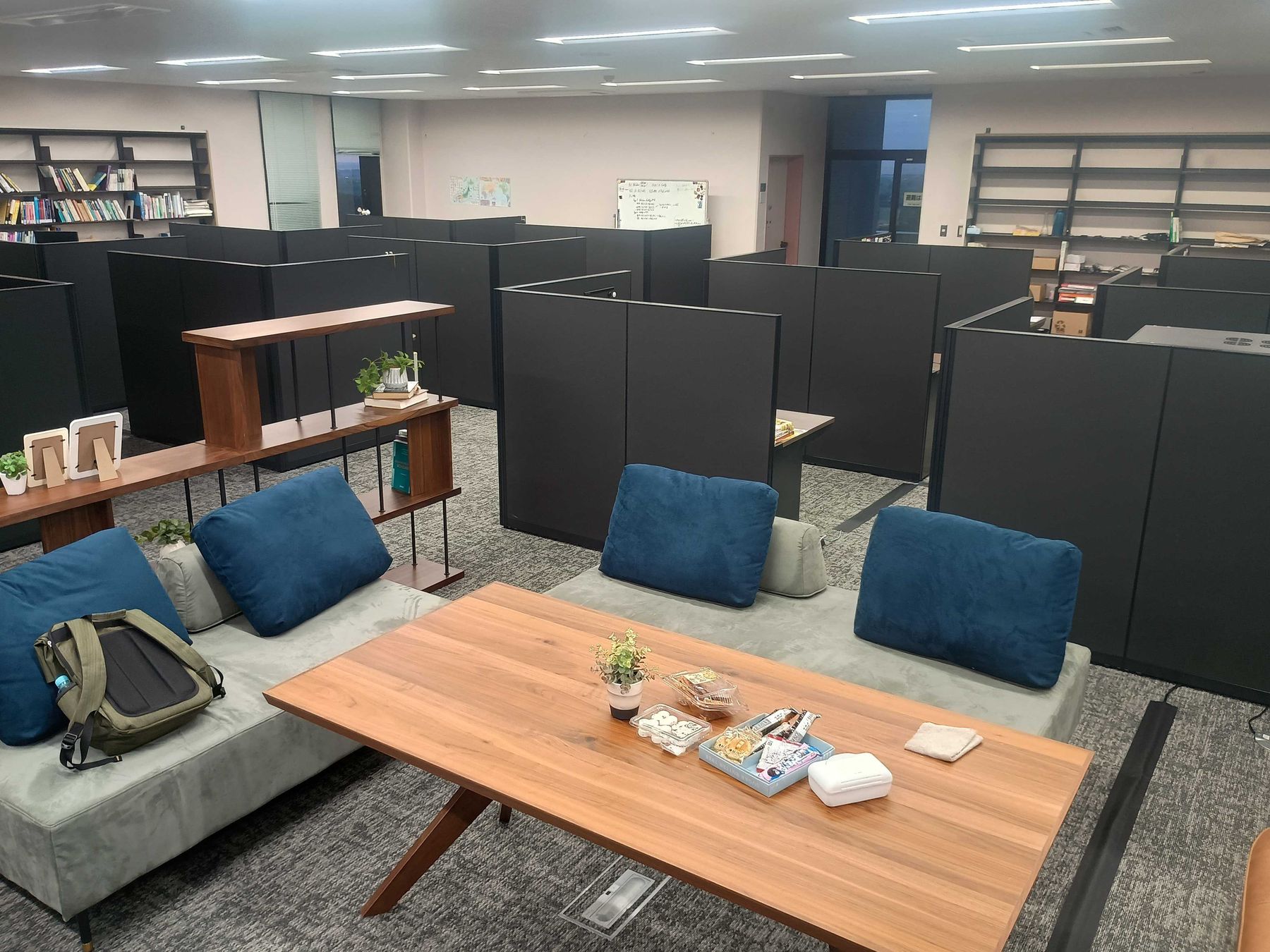
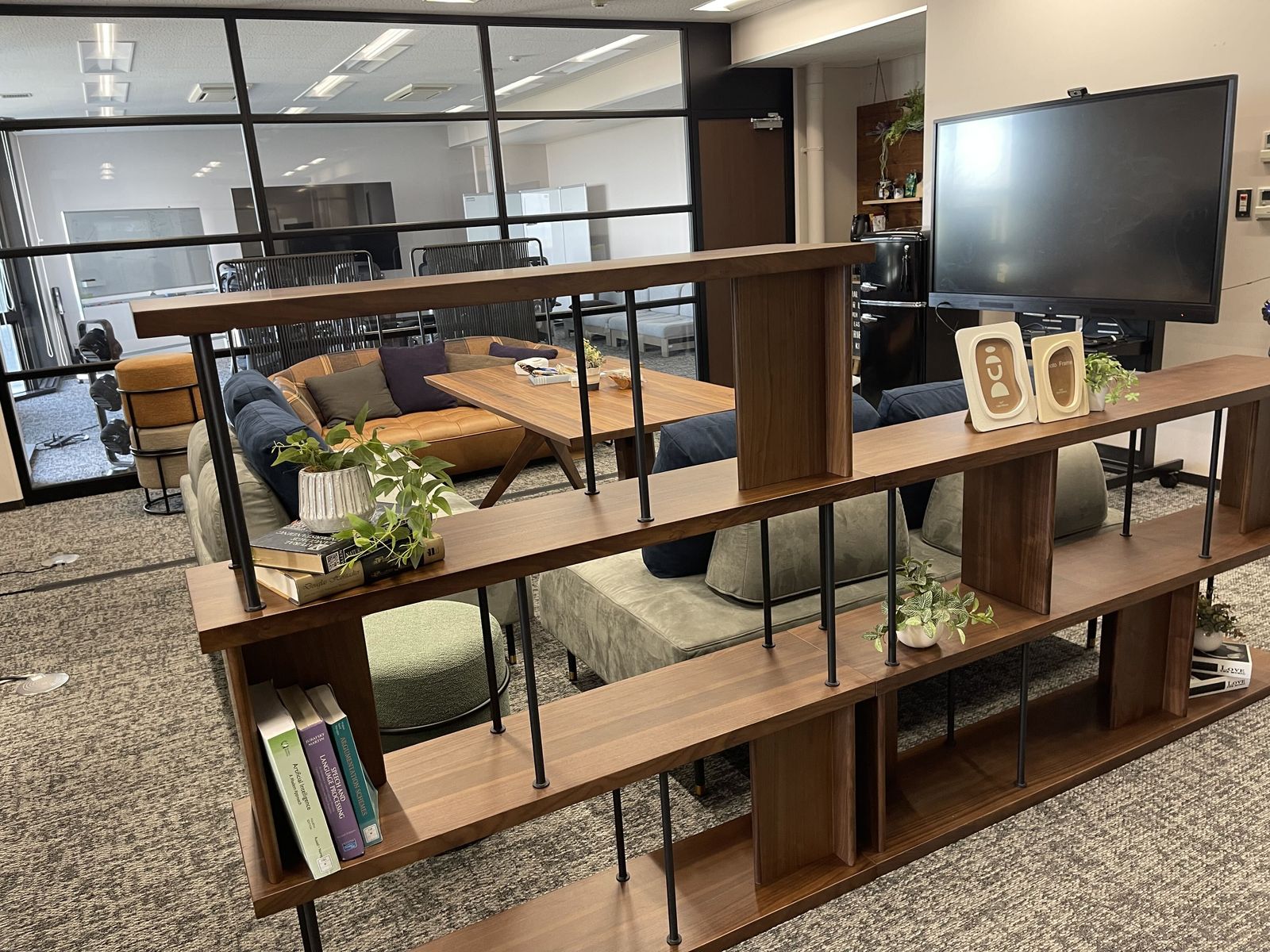
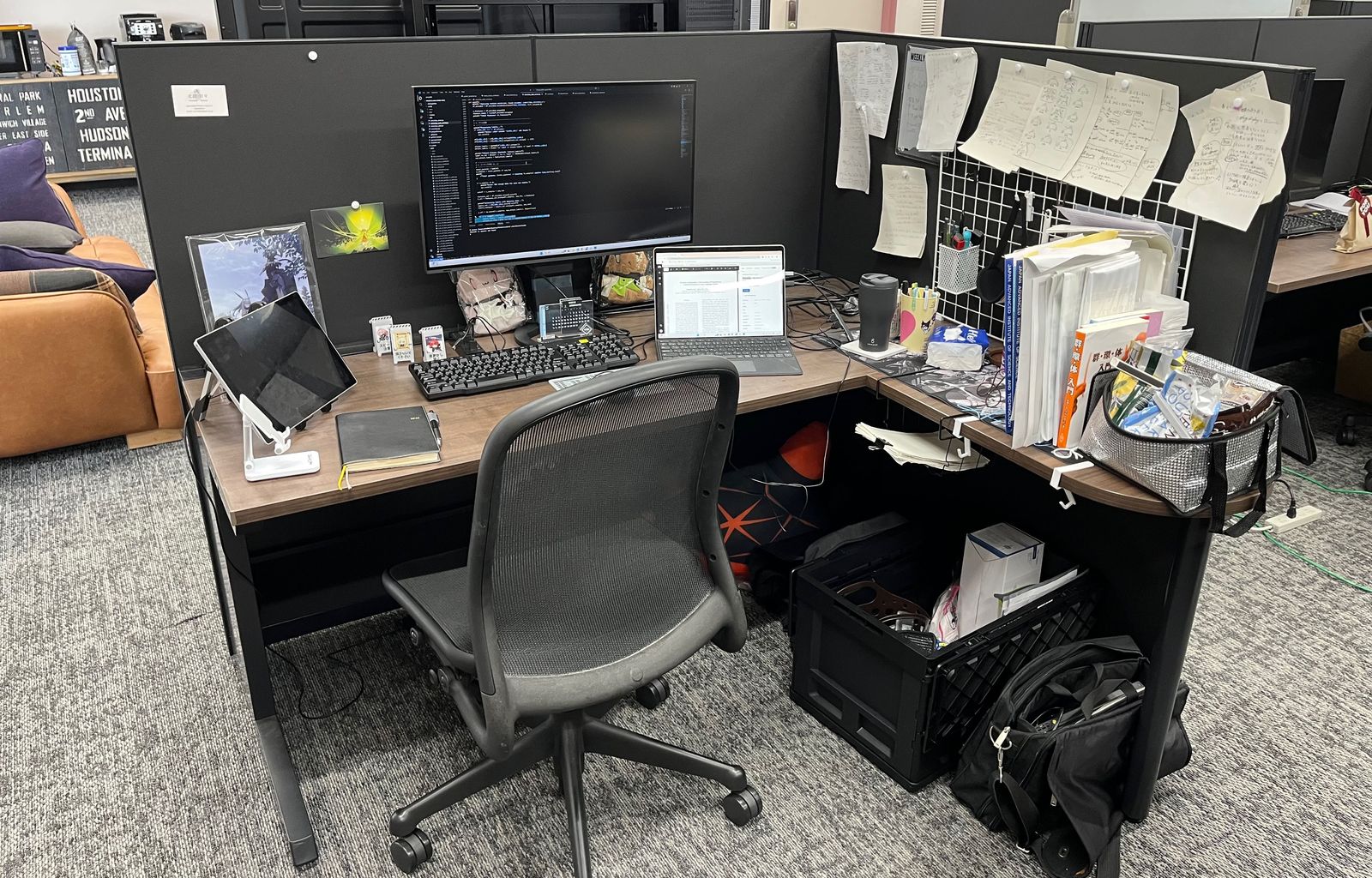
One important mission of a university research lab is to develop students’ skills. We design lab activities so that students acquire general-purpose skills for problem-finding and problem-solving, on top of expertise in natural language processing research and related areas.
Through the lab activities, students learn how to think critically, how to plan, how to present their work, how to dive into unknown fields, how to program, and how to work as a team. Our motto is that research is the best on-the-job training for developing such skills, a phrase Prof. Inoue learned from his own mentor.
To help students succeed globally, we use English as the common language in all lab activities.
The lab runs many types of student-driven activities:
Weekly
Lab meetings. All members meet every week to skim recent NLP papers together. Once a month, members present their progress at a poster session, and members whose work is nearly complete give spotlight talks to share what they have learned.
Weekly
Project meetings. Each project team, including Prof. Inoue, meets to share progress and give each other feedback on problems and possible solutions. Some projects are joint with other universities or companies.
Weekly
Study groups. Knowledge fuels healthy research, so we learn together: interpretability, argumentation, NLP fundamentals, programming, and anything else of interest. Some groups run jointly with other universities.
Weekly
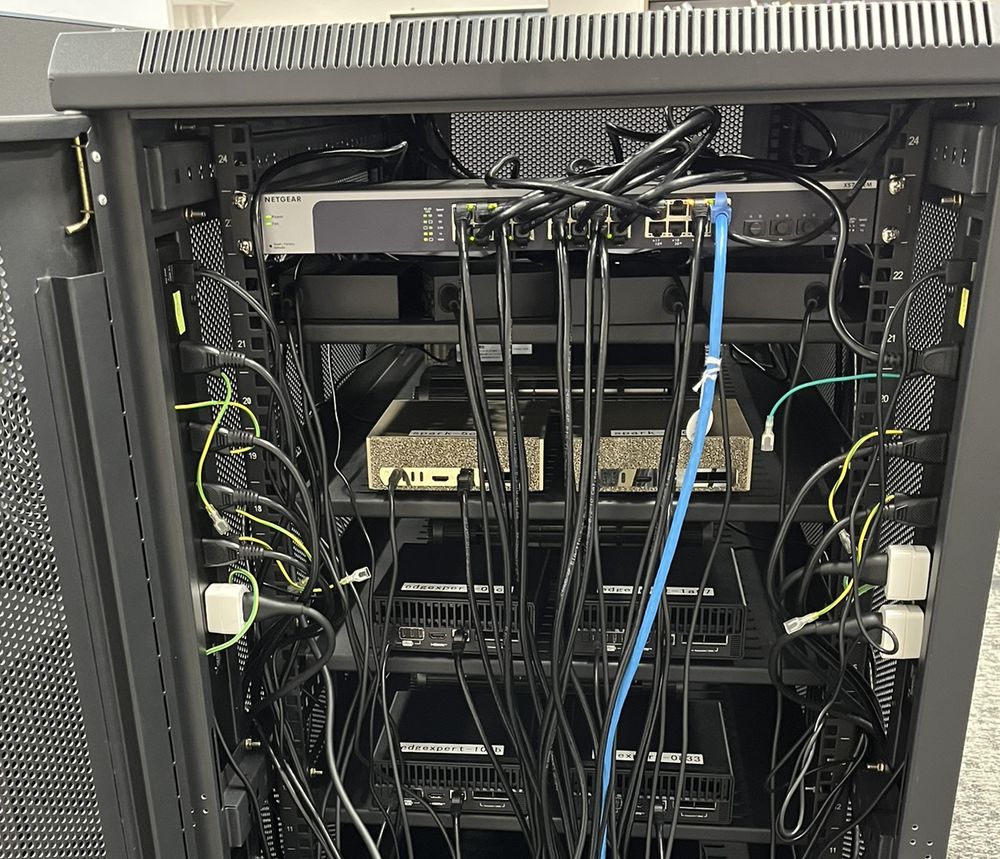
Working groups (WGs). Members share the work of running the lab in three working groups: one improves the lab environment, one runs lab operations such as education and outreach, and one maintains the computing infrastructure.
On demand
One-on-ones. Members can meet Prof. Inoue individually whenever they need to discuss their research or anything else.
On demand
Social gatherings. Welcome and farewell parties, birthdays, year-end and New Year celebrations, and more.
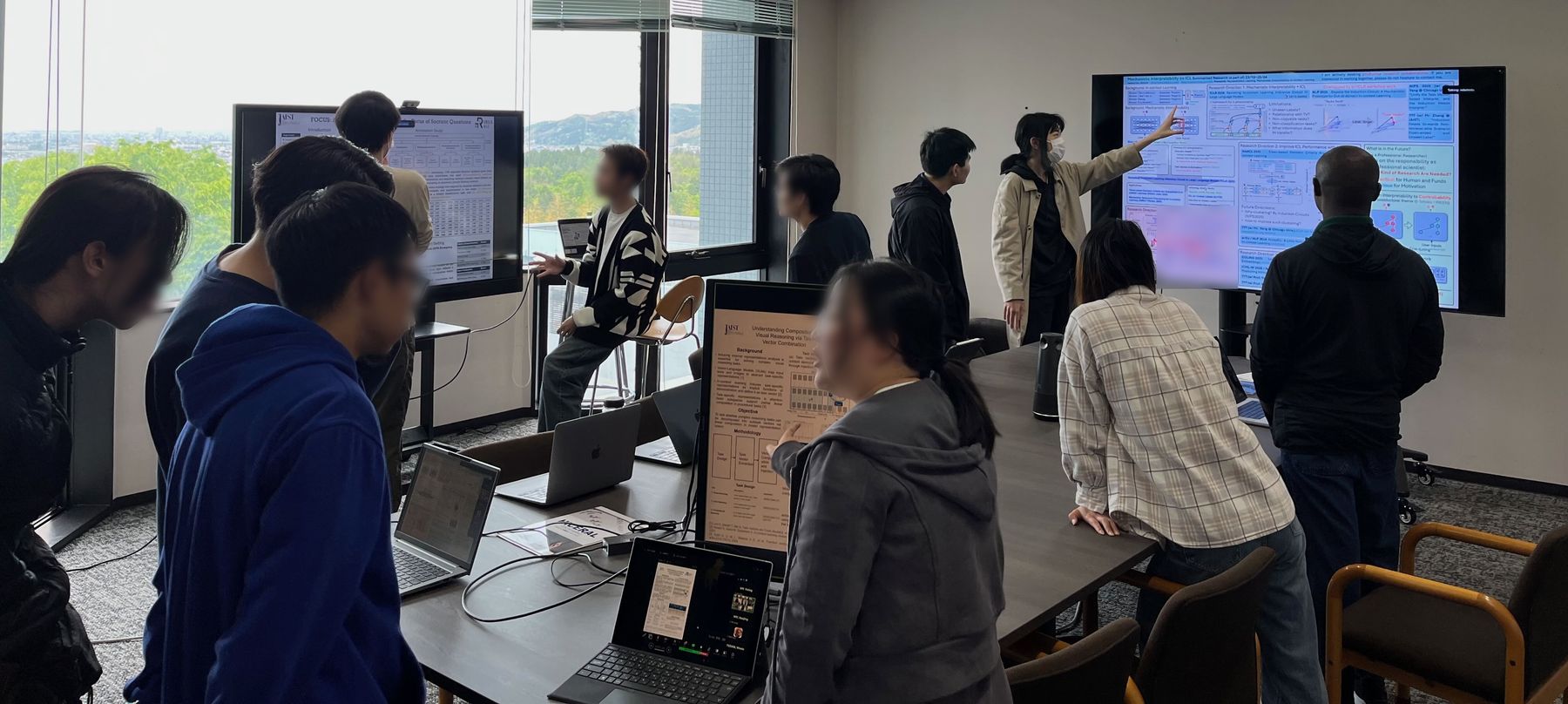
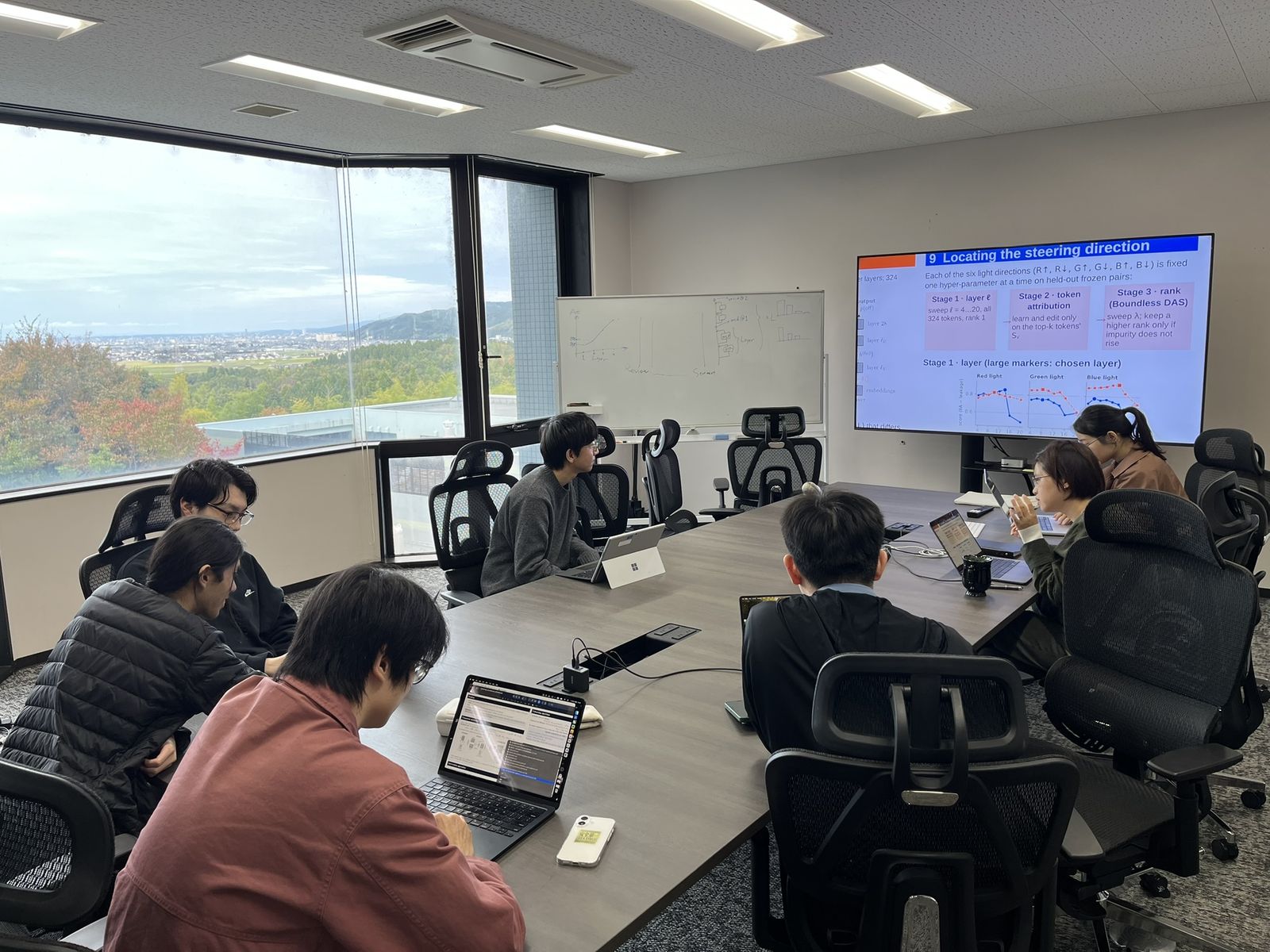
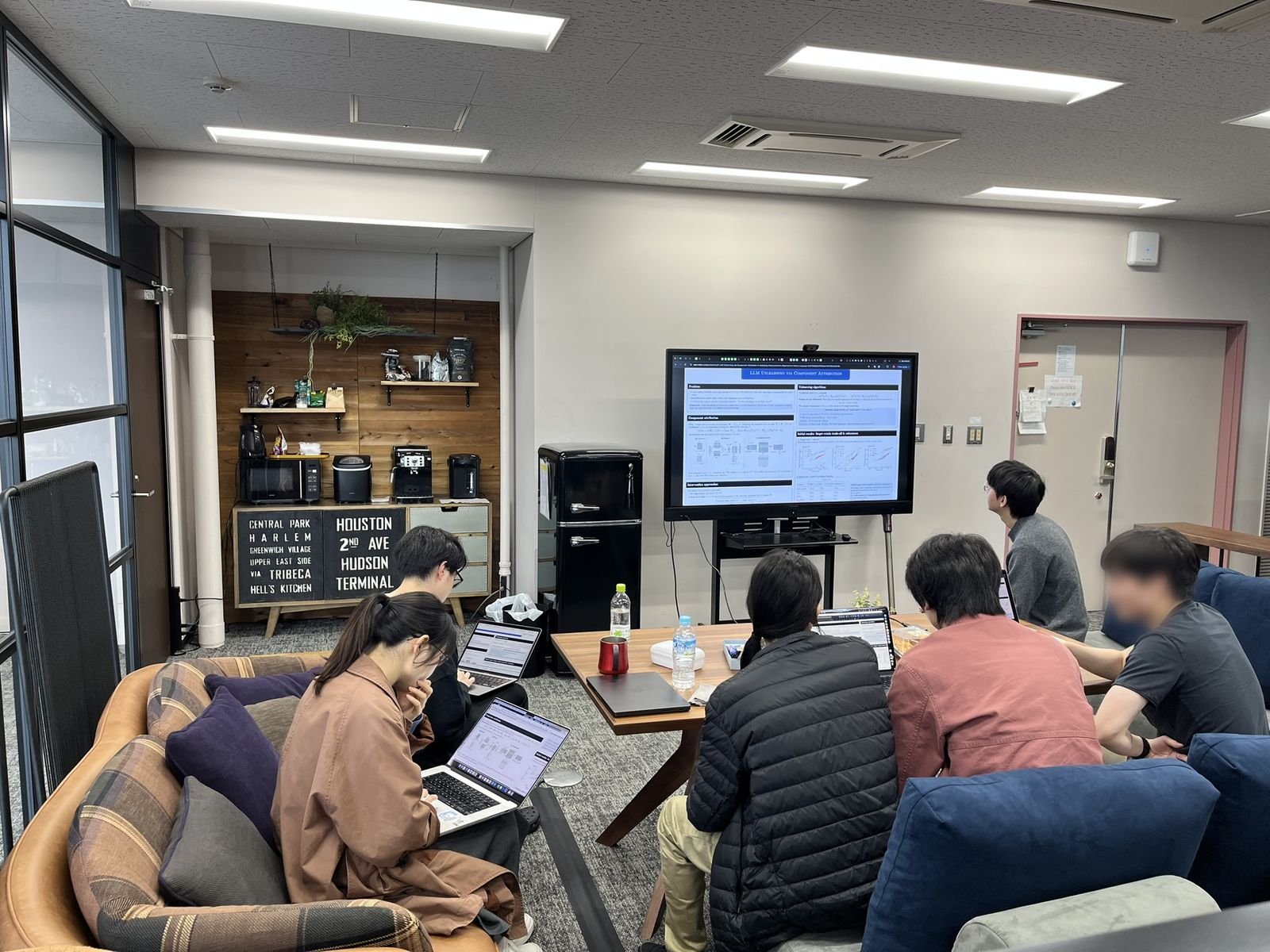
Here is an example of a week in the lab. Everyone attends the lab meeting; beyond that, each member joins the meetings of their own projects and the study groups they choose. Meetings marked joint are held with other universities.
Beyond these activities, students carry out research end to end: they discuss ideas with lab members, implement them as computational models, evaluate them quantitatively and qualitatively, and, after many trials, publish their findings at international conferences, refining their ideas through discussions with researchers worldwide.